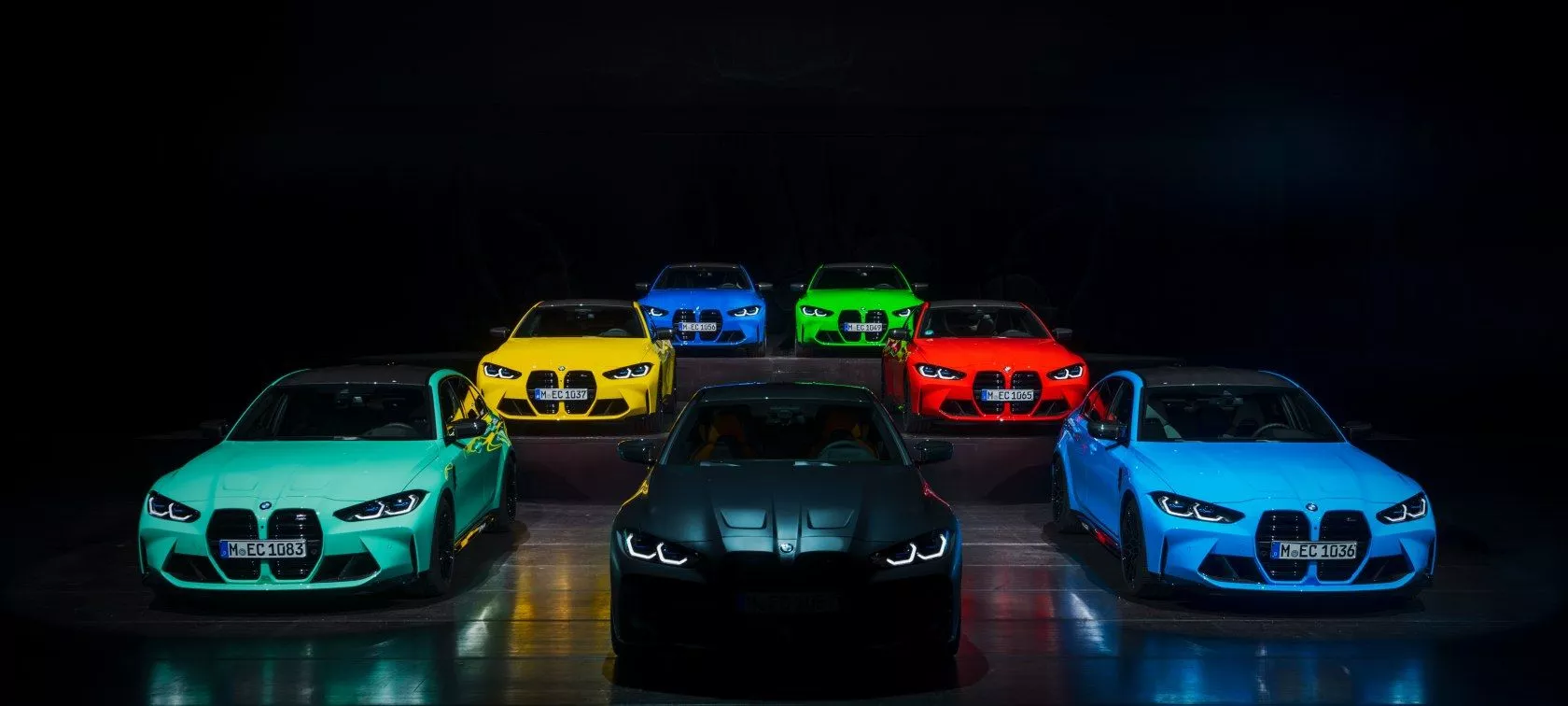
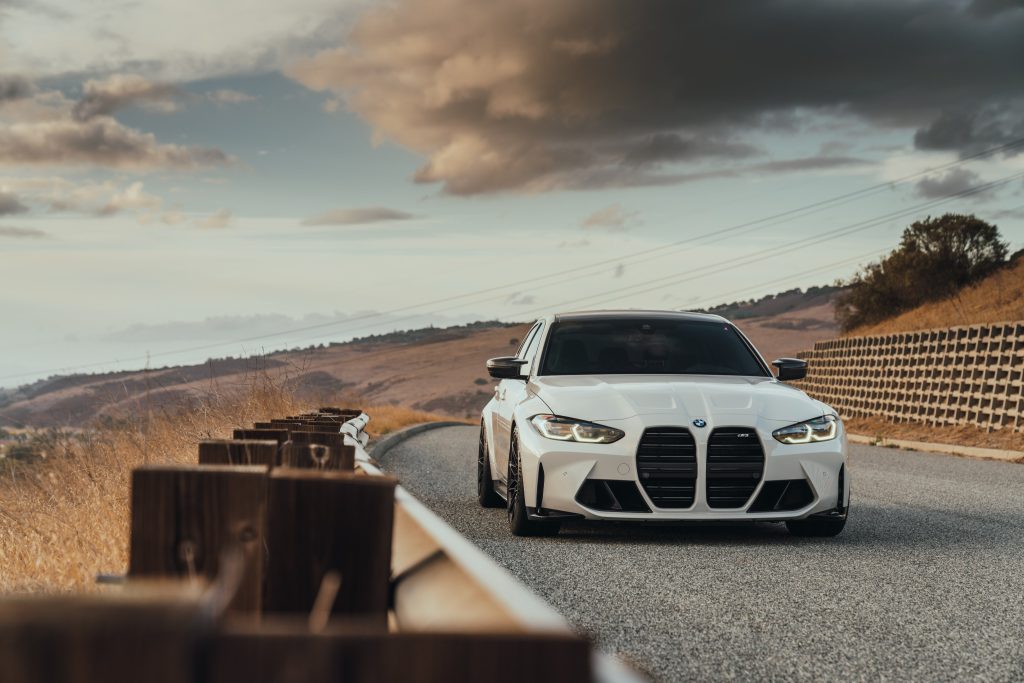
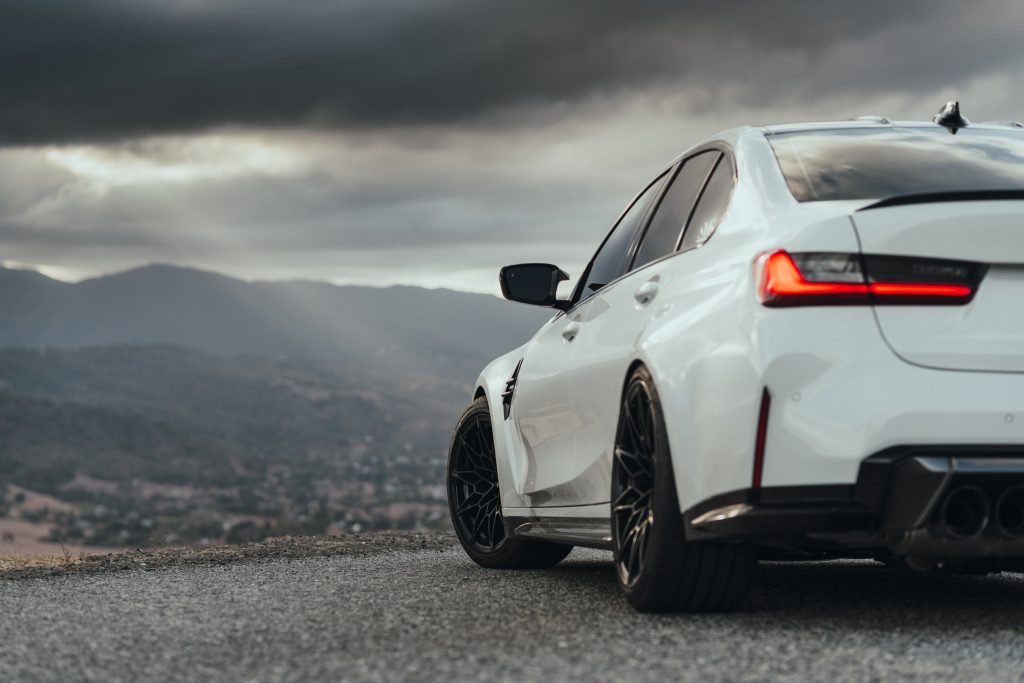
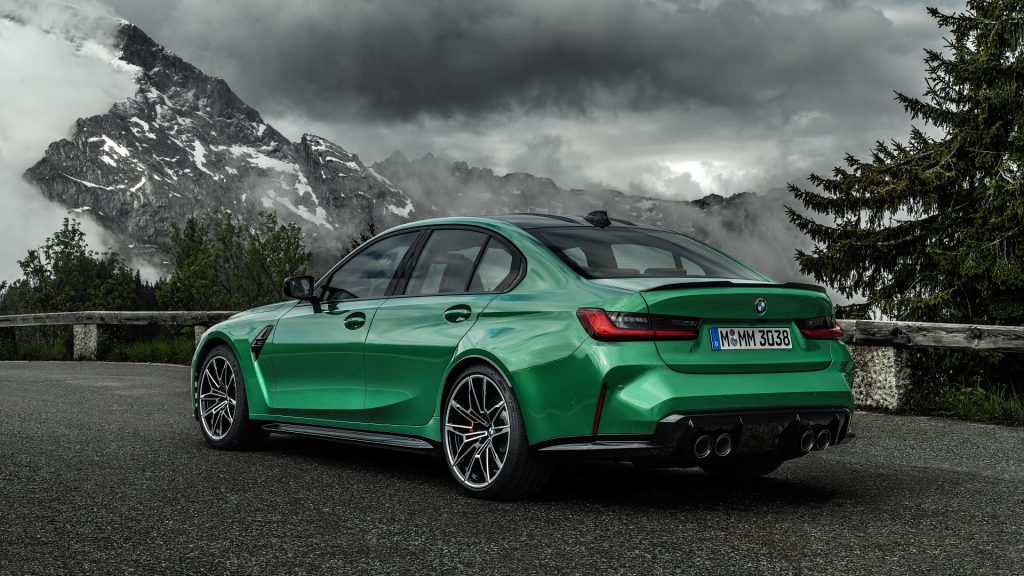
The BMW M3 G80 Competition is one of those cars that people argue about online and then quietly respect in real life. Yes, it’s the one with the big kidney grilles. It’s also the one with a 3.0-litre twin-turbo straight-six, up to 390 kW and 650 Nm, an 8-speed M Steptronic gearbox and (in xDrive form) 0–100 km/h in about 3.5 seconds – in a four-door sedan with a proper boot and real back seats.
For anyone who cares about fast German sedans – RS, AMG or M – the G80 M3 Competition is one of the main cars everything else gets compared to.
Where the G80 Sits in the M3 Story
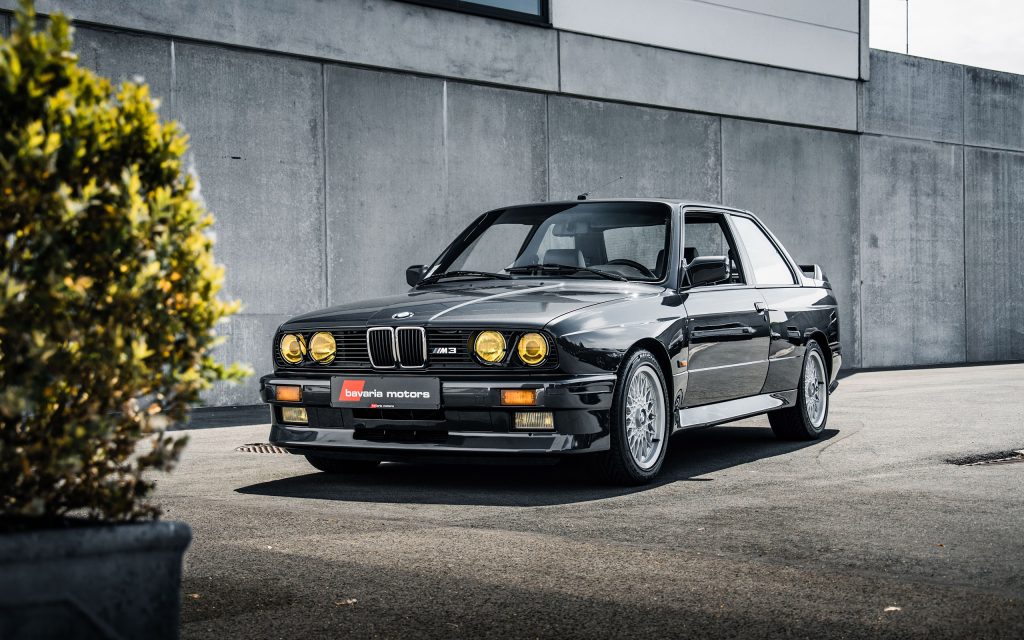
The M3 story starts in the 1980s with the E30 – light, high-revving, built for homologation racing. Since then every generation has followed the same idea: take a normal 3 Series, turn the engine and chassis up to 11, and make it something you can drive to work during the week and to a track day on the weekend.
The G80 generation (launched around 2020) is the first M3 to:
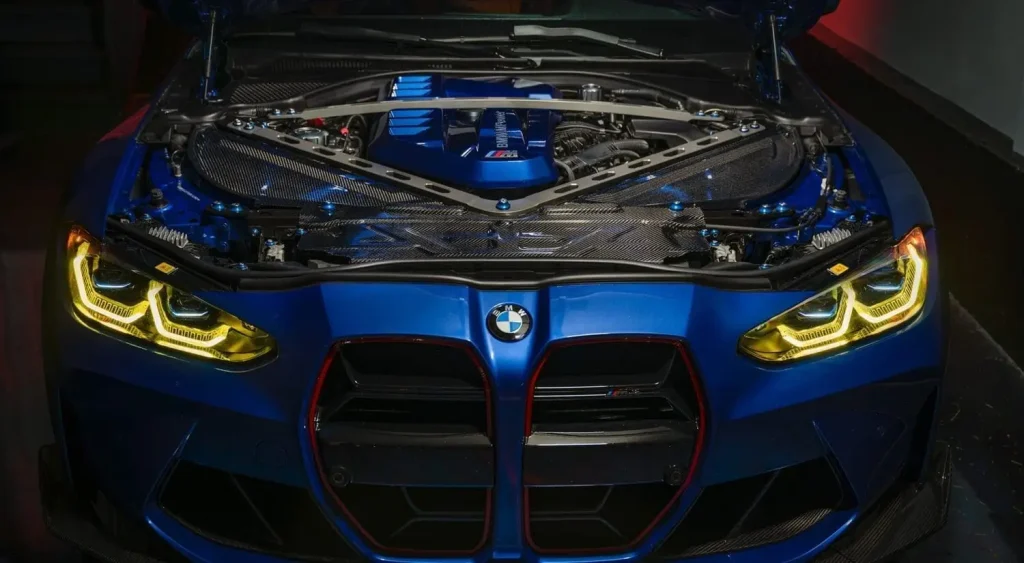
Use the S58 3.0-litre twin-turbo inline-six
Offer a Competition model with optional M xDrive all-wheel drive
Hit performance numbers that used to belong to supercars, not sedans
Visually it’s more aggressive and controversial than older M3s, but underneath it’s the classic recipe: serious powertrain, stiffened chassis, big brakes and a cabin that still works like a normal 3 Series when you’re just doing life stuff.
Engine and Performance: S58 Explained
At the heart of the M3 Competition is the S58 engine – a 3.0-litre BMW M TwinPower Turbo inline-six. In the latest Competition with xDrive, BMW quotes:
Power: 390 kW (530 hp)
Torque: 650 Nm
Gearbox: 8-speed M Steptronic automatic with Drivelogic
Drivetrain: M xDrive all-wheel drive with Active M differential
0–100 km/h: 3.5 seconds
Top speed: 250 km/h as standard, up to about 290 km/h with the M Driver’s Package
In simpler terms:
kW / hp is how strong the engine is at higher speeds – 390 kW means the car keeps pulling hard well past highway speeds.
650 Nm is the shove you feel in your back – strong torque from low revs makes overtaking and on-ramps feel effortless.
3.5 seconds to 100 km/h is crazy in a practical sedan; not long ago that was Ferrari/Lamborghini territory.
The M xDrive system is rear-biased. In normal modes it feels like a very grippy rear-drive car; when the rear starts to lose traction, power is sent forward to pull you out. Depending on market and mode, there are settings that let the car behave more like a classic rear-drive M3 if you want it to move around more.
Chassis, Weight and How It Feels
The spec sheet shows that the G80 is not light. Curb weight for the M3 Competition with xDrive is around 1 850 kg, with the rear-drive Competition a bit lighter. Wheelbase sits at about 2 857 mm, and the body is wider and more planted than a standard 3 Series.
To make that weight work, BMW throws a lot of hardware at it:
Adaptive M suspension with multiple modes
Extra bracing and stiffening in the chassis
Active M differential on the rear axle
Very serious brakes, with optional carbon-ceramic discs for heavy track use
On the road, that all translates into a car that turns in harder than you’d expect, feels incredibly stable at speed and lets you lean on the front end without it washing wide too easily. Steering is precise rather than old-school talkative, but the front responds cleanly and the car feels “keyed in” when you push.
In Comfort modes, the car is totally happy doing traffic, school runs and long highway trips. In Sport and Sport Plus everything tightens up – throttle, gearbox, dampers, steering – and the M3 suddenly feels like a proper weapon. You can save your favourite setups into the M1 and M2 buttons on the steering wheel so you jump between “daily” and “angry” with one tap.
Fuel Consumption and Everyday Efficiency
Official WLTP figures for the M3 Competition with xDrive are about 10.2 l/100 km combined. The rear-drive Competition sits around 10.0 l/100 km on the same test cycle.
Real-world, if you actually use the power now and then, most owners live in the 11–14 l/100 km range. A gentle highway cruise can dip lower; a track day or repeated launch-control runs will push it higher. That’s the cost of running a 390 kW straight-six.
To get a rough total cost of ownership picture, imagine:
Average real-world consumption: 12 l/100 km
Annual distance: 15 000 km
Fuel used per year: 15 000 ÷ 100 × 12 = 1 800 litres
Multiply that by your local price of 95 octane and you get a ballpark annual fuel bill similar to an RS, AMG or any other big-power petrol performance sedan.
On top of fuel you have:
Tyres: high-performance 19″/20″ tyres that are not cheap, especially if you drive hard.
Brakes: standard M brakes are strong; optional carbon-ceramics cost more upfront but can handle repeated heavy use.
Servicing: mostly predictable with BMW plans; the S58 engine is now used across M2, M3, M4 and X3 M/X4 M, so workshops know it well.
Rivals and How the G80 Stands Up
The G80 M3 Competition doesn’t exist in a vacuum. Its main German rivals are:
Mercedes-AMG C63 S E Performance (W206): a 2.0-litre turbo four with a plug-in hybrid system making around 500 kW and 1 020 Nm. It’s massively powerful on paper, but heavier and more complex. Many reviewers say the M3 still feels sharper, lighter on its feet and more natural at the limit.
Audi RS 5 Sportback: a 2.9-litre twin-turbo V6 with around 331–346 kW and 600 Nm, quattro all-wheel drive and a more coupe-like body style. The RS 5 is an excellent GT with huge grip and a beautiful cabin, but the M3 is the more playful, adjustable driver’s car.
Alfa Romeo Giulia Quadrifoglio: slightly left-field but often mentioned – lighter, very sharp steering feel, Ferrari-influenced engine, but not as common or as “sorted” in terms of dealer network and long-term familiarity in some markets.
There’s also “pressure from above” from cars like the Porsche Taycan and RS e-tron GT, and from the side by hot EVs like the Tesla Model 3 Performance – but in the pure ICE performance sedan world, the G80 M3 is still one of the reference points everyone else is judged against.
Interior, Tech and Liveability
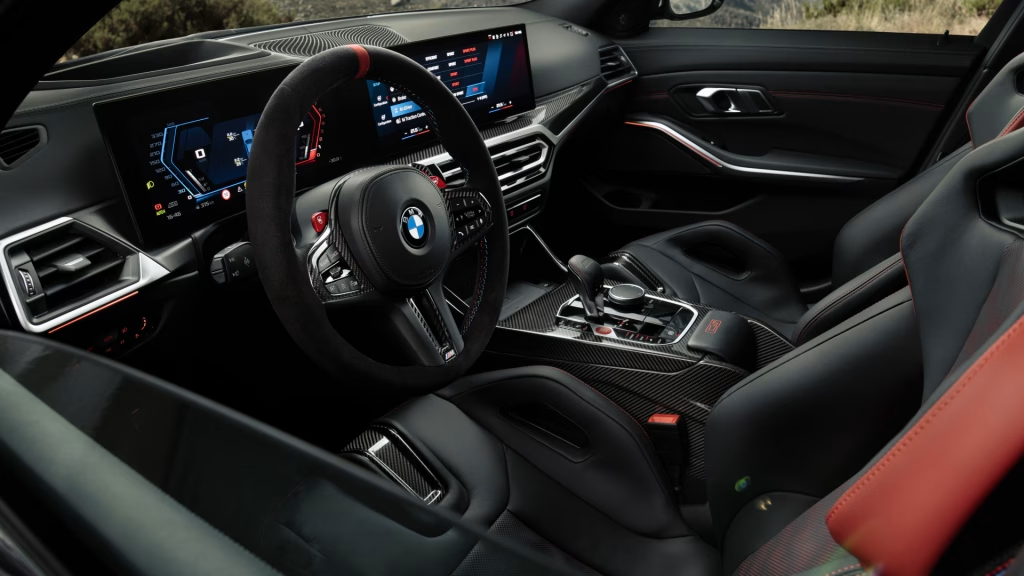
Inside, the G80 combines the latest BMW tech with the usual M details:
Optional M carbon bucket seats for maximum support, or more comfortable M Sport seats if you daily drive a lot
M steering wheel with red M1 and M2 mode buttons
Curved dual-screen layout and latest iDrive on newer cars
Good rear legroom and a 480-litre boot – it’s still a 3 Series at heart
Material quality is high, the infotainment is feature-rich once you learn it, and the driving position is spot-on for spirited driving. As an all-rounder, it can do family trips, airport runs, and then go straight to a track day.
Who the G80 M3 Competition Is Really For
The G80 M3 Competition is not aimed at someone just looking for “a fast car”. It’s built for:
Drivers moving up from hot hatches or smaller performance cars into a serious M, RS or AMG level sedan
Enthusiasts who actually care how a car steers, stops and behaves on the limit – not just 0–100 times
People who want one car that can do it all: daily commuting, family duty, long-distance touring and track days
Buyers who are okay with bold styling and want something that stands out in traffic
If you want something softer and more luxurious first, you might lean towards a big AMG or a larger Audi. If you want a performance sedan that still feels like a driver’s car, the G80 M3 Competition stays very close to the top of the list.
Why the G80 Matters in the German Performance War
The BMW M3 G80 Competition is controversial to look at but very difficult to criticise as a complete package. With a 3.0-litre twin-turbo straight-six, 390 kW and 650 Nm, rear-biased xDrive, a configurable chassis and a genuinely usable interior, it sets a modern benchmark for fast four-door ICE performance.
For Mr Audi as a brand, understanding this car in detail is important. When we talk about RS4, RS5, RS6, RS7 or the new wave of electric RS models, this is one of the main yardsticks. It’s the car Audi has to beat on engagement and feel – and the car that many buyers will cross-shop when they’re serious about spending real money on a German performance sedan.
“Mr Audi is your trusted German car specialist — a focused brand dedicated to Audi, BMW, Mercedes-Benz and Volkswagen, combining expert knowledge, in-depth reviews, ownership guidance and hand-picked vehicle listings to help enthusiasts and everyday drivers make smarter decisions.”
Mr Audi is the home of German car excellence — your trusted source for expert knowledge, honest comparisons, vehicle purchases, and service guidance across Audi, BMW, Mercedes-Benz, and Volkswagen. When it comes to German cars, don’t just search. Ask Mr Audi.
To provide the best experiences, we use technologies like cookies to store and/or access device information. Consenting to these technologies will allow us to process data such as browsing behavior or unique IDs on this site. Not consenting or withdrawing consent, may adversely affect certain features and functions.
Functional
Always active
The technical storage or access is strictly necessary for the legitimate purpose of enabling the use of a specific service explicitly requested by the subscriber or user, or for the sole purpose of carrying out the transmission of a communication over an electronic communications network.
Preferences
The technical storage or access is necessary for the legitimate purpose of storing preferences that are not requested by the subscriber or user.
Statistics
The technical storage or access that is used exclusively for statistical purposes.The technical storage or access that is used exclusively for anonymous statistical purposes. Without a subpoena, voluntary compliance on the part of your Internet Service Provider, or additional records from a third party, information stored or retrieved for this purpose alone cannot usually be used to identify you.
Marketing
The technical storage or access is required to create user profiles to send advertising, or to track the user on a website or across several websites for similar marketing purposes.